
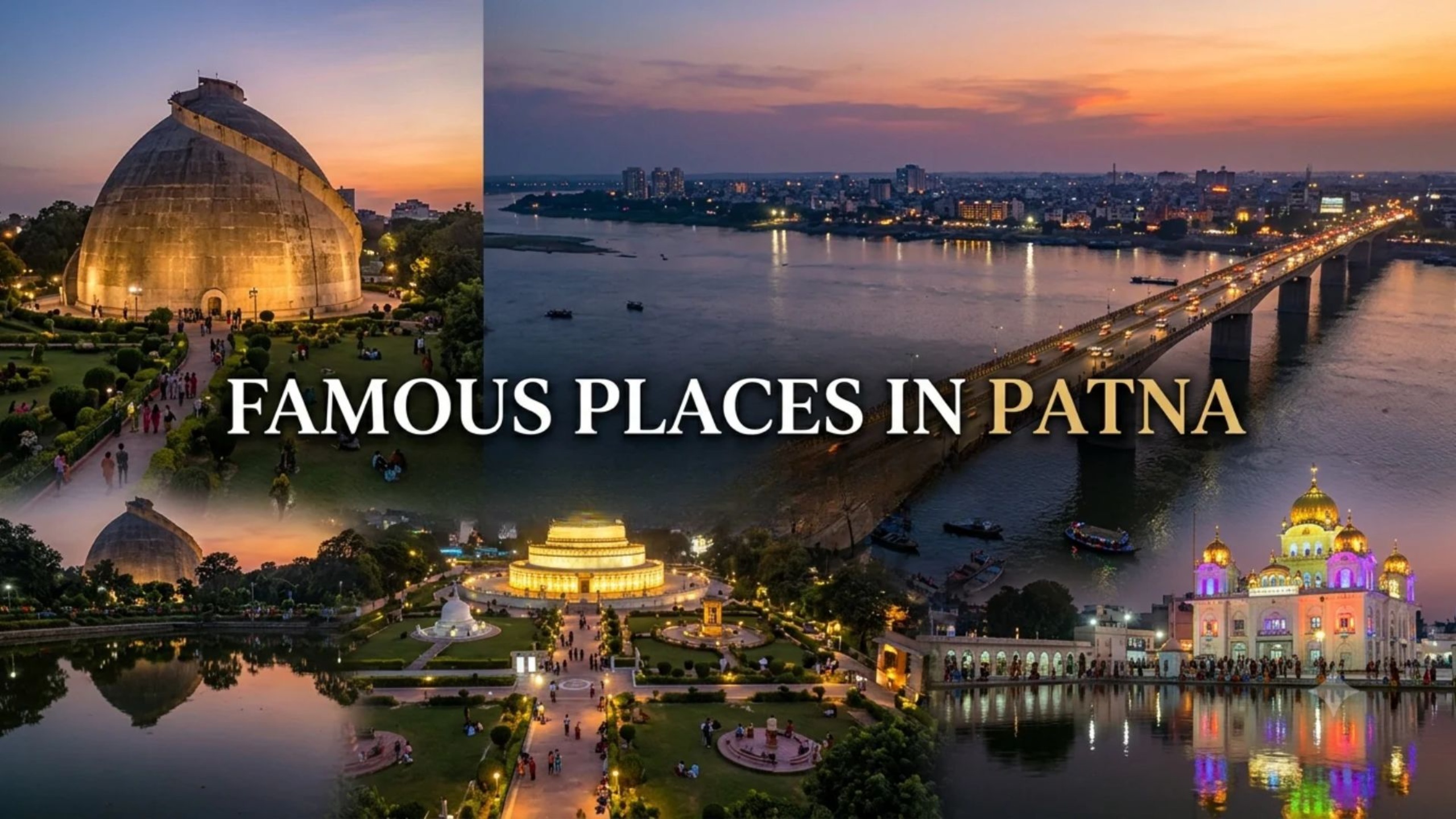
Patna combines ancient Indian history, religious landmarks, museums and riverside attractions. Famous places in Patna include Golghar, Takht Sri Patna Sahib, Bihar Museum, Kumhrar and Gandhi Ghat. Whether you have one day for sightseeing or a weekend to explore the city, these attractions offer a useful starting point for discovering Bihar’s capital, its cultural heritage and its connection to ancient Pataliputra.
1. Golghar
Golghar is one of Patna’s most recognisable historical landmarks. Built in 1786 by Captain John Garstin, the dome-shaped granary was designed to store grain following the devastating famine of 1770.
The structure stands approximately 29 metres tall and has a spiral staircase with 145 steps. Its design makes it stand out from conventional monuments, while the elevated position offers views of the surrounding city and the Ganga when rooftop access is available.
Located near Gandhi Maidan, Golghar is a convenient starting point for exploring central Patna. Check current access arrangements before planning to climb the staircase.
What makes it worth visiting: Its unusual architecture, colonial-era history and views of Patna.
Official source: Bihar Tourism’s Golghar guide
2. Takht Sri Patna Sahib
Takht Sri Harmandir Ji Patna Sahib is one of the five principal Takhts of Sikhism. The gurdwara marks the birthplace of Guru Gobind Singh Ji, the tenth Sikh Guru, giving it considerable religious and historical significance.
The shrine attracts pilgrims from across India and abroad. Visitors can learn about its connection to Sikh history and experience the atmosphere of an important place of worship. Follow the gurdwara’s dress and head-covering requirements, and respect its religious practices.
Located in Patna City, it is best included in a heritage-focused itinerary covering eastern Patna rather than combined hurriedly with every attraction in the city centre.
What makes it worth visiting: Its significance in Sikhism and its connection to Guru Gobind Singh Ji.
Official source: Bihar Tourism’s Sikh Circuit
3. Bihar Museum
Bihar Museum on Bailey Road explores the state’s history, art and cultural heritage through archaeological objects, sculptures and curated exhibitions. Its modern setting offers a different experience from Patna’s older monuments and traditional museum buildings.
This is a worthwhile stop for visitors who want to understand Bihar’s historical development rather than simply photograph its landmarks. Families and students may also find the exhibitions useful for learning about the region.
Allow sufficient time to explore the galleries. Before visiting, confirm the current opening hours, entry fees and any exhibition-specific arrangements on the official tourism website.
What makes it worth visiting: Its collections and exhibitions covering Bihar’s cultural and historical legacy.
Official source: Patna district administration’s Bihar Museum page
4. Patna Museum
Established in 1917, Patna Museum is an important destination for anyone interested in the region’s archaeology and artistic heritage. Its collections include historical artefacts and sculptures that reflect different periods of Bihar’s past.
The museum offers a useful complement to visits to ancient sites such as Kumhrar. Travellers interested in historical objects may prefer to visit both, while those with limited time can choose between Patna Museum and Bihar Museum according to their interests and the exhibitions available.
Check the current visitor information before travelling, particularly if the museum is a priority on your itinerary.
What makes it worth visiting: Its historical collections and long-standing role in preserving Bihar’s heritage.
Official source: Bihar Tourism’s Patna destination guide
5. Buddha Smriti Park
Buddha Smriti Park is a landscaped urban park near Patna Junction, dedicated to the memory and teachings of Gautama Buddha. Its prominent stupa, green surroundings and contemplative atmosphere distinguish it from the city’s archaeological and colonial-era attractions.
The park is a convenient addition to a central Patna itinerary, particularly for visitors arriving by train. It offers an opportunity to slow down between museum visits and other sightseeing stops.
If you plan to visit the park’s indoor facilities or meditation-related spaces, confirm their current availability and access arrangements in advance.
What makes it worth visiting: Its Buddhist heritage, landscaped grounds and central location.
Official source: Patna district administration’s places of interest
6. Kumhrar Park
Kumhrar is an archaeological site associated with ancient Pataliputra, the city that served as an important centre under several Indian dynasties. Excavations in the area have revealed remains that help researchers understand the scale and development of this historic settlement.
One of the site’s best-known archaeological discoveries is an 80-pillared hall, commonly associated with the Mauryan period. The remains offer a tangible connection to the history of ancient Bihar, although visitors should distinguish archaeological evidence from interpretations of the site’s original use.
Kumhrar is particularly worthwhile for travellers interested in ancient Indian history. Reading about Pataliputra before arriving can help put the archaeological remains into context.
What makes it worth visiting: Its archaeological connection to one of ancient India’s major urban centres.
Official source: Patna Municipal Corporation’s city tourism guide
7. Agam Kuan
Agam Kuan is an ancient well associated with the archaeological and religious heritage of Patna. It is traditionally linked to the Mauryan period and local stories about Emperor Ashoka, although such historical traditions should not automatically be treated as established fact.
The site provides another perspective on the history of ancient Pataliputra. Unlike a large museum or monument, it is a relatively focused stop, so it makes more sense as part of a wider heritage itinerary.
Visitors exploring the older parts of Patna can consider combining Agam Kuan with other nearby historical or religious sites, depending on travel time and access.
What makes it worth visiting: Its historical associations and place in Patna’s archaeological landscape.
Official source: Patna district administration’s places of interest
8. Sabhyata Dwar
Sabhyata Dwar is a prominent sandstone gateway on the Ganga riverfront. Its design draws inspiration from Mauryan architectural traditions and commemorates Bihar’s long civilisational history.
The monument offers a contrast to Patna’s older archaeological remains: it is a contemporary landmark that draws on the region’s ancient heritage. Its architectural scale and riverfront setting also make it a suitable stop for photography.
Consider visiting it alongside other central Patna attractions. Check local access conditions before travelling, particularly if you plan to visit around sunset or during a public event.
What makes it worth visiting: Its sandstone architecture, historical symbolism and riverfront location.
Official source: Patna Municipal Corporation’s city tourism guide
9. Gandhi Ghat
Gandhi Ghat is a riverside destination along the Ganga where visitors can experience a different side of Patna. The open river views and evening atmosphere make it a popular place to pause after exploring the city’s historical landmarks.
The ghat is also associated with Ganga Aarti, a religious ceremony that attracts visitors when it is held. However, the schedule and local arrangements may change, so confirm the current timings before planning your visit around the ceremony.
Because the ghat is a riverside location, follow local safety instructions and any restrictions affecting access to the water.
What makes it worth visiting: Riverside views, religious traditions and an opportunity to experience the Ganga in Patna.
Official source: Bihar Tourism’s Gandhi Circuit
10. Sanjay Gandhi Jaivik Udyan
Sanjay Gandhi Jaivik Udyan, popularly known as Patna Zoo, is a major outdoor attraction for families and wildlife enthusiasts. The zoological park provides an alternative to a sightseeing itinerary dominated by monuments, museums and religious sites.
Visitors can explore the grounds and observe animals in the zoo’s designated viewing areas. As the experience involves walking outdoors, allow enough time and consider the weather, particularly during Patna’s hotter months.
Check current visitor guidelines, opening hours and animal-viewing arrangements before setting out. Families travelling with children should also check any restrictions on food, photography or activities inside the park.
What makes it worth visiting: Wildlife viewing and a family-friendly outdoor activity.
Official source: Incredible India’s Patna destination guide
11. Rajdhani Vatika (Eco Park)
Rajdhani Vatika, commonly called Eco Park, is a landscaped public park that offers open spaces, walking areas and leisure facilities. It is suited to visitors looking for a relaxed outdoor experience rather than another historical exhibition.
The park can be a useful addition to a family trip or a longer stay in Patna. Depending on the facilities available during your visit, you may be able to enjoy its themed gardens and recreational activities.
Check the current operating hours and any activity-specific charges before visiting, as individual facilities may have separate arrangements.
What makes it worth visiting: Its green spaces and recreational setting within the city.
Official source: Patna Municipal Corporation’s city tourism guide
How to Plan a Sightseeing Trip Around Patna
Patna’s attractions are spread across different parts of the city, so the best itinerary depends on your available time, interests and starting point. Group nearby attractions together, allow time for traffic and verify opening hours before finalising your route.
A practical one-day itinerary
If you have only one day, focus on central Patna instead of attempting to cover all 11 attractions. This sample plan is a starting point; the actual sequence should depend on opening hours and road conditions.
| Time of day | Suggested visit | Planning note |
|---|---|---|
| Morning | Golghar | Start with the historic granary and its surrounding area. |
| Late morning or afternoon | Bihar Museum or Patna Museum | Choose one museum if you want enough time to explore its collections. |
| Afternoon | Buddha Smriti Park | Add this stop if time permits and the park is open. |
| Late afternoon | Sabhyata Dwar | Visit for its architecture and riverfront setting, subject to access. |
| Evening | Gandhi Ghat | Check the current access arrangements and Ganga Aarti schedule in advance. |
This route is a suggested framework rather than a fixed timetable. Traffic, queues and the time spent inside a museum can affect how many stops are practical in one day.
If you have two days
A two-day trip makes it easier to explore the city without rushing between attractions.
- Day 1 — Central Patna: Visit Golghar, choose one museum, explore Buddha Smriti Park and add Sabhyata Dwar if time allows.
- Day 2 — Historical and religious Patna: Focus on Takht Sri Patna Sahib, Kumhrar and Agam Kuan, arranging the stops according to their locations and opening hours.
Sanjay Gandhi Jaivik Udyan and Eco Park can be added if outdoor recreation is a priority. If religious heritage is your main interest, allow more time for Patna Sahib and its surrounding area.
Best Time to Visit Patna
October to March is generally a comfortable period for sightseeing in Patna, with cooler weather making outdoor visits more manageable than during the hottest months.
Summer visitors should plan outdoor activities for earlier or later in the day and take breaks between stops. During the monsoon, rain may affect riverfront visits, outdoor activities and travel times.
Before leaving your accommodation, check official information for opening hours, entry fees, weekly closures and temporary restrictions. Religious sites may have specific visitor protocols, while museum and park facilities can operate on different schedules.
Where to Stay During Your Patna Visit
The right accommodation can make a sightseeing trip easier, particularly if you want to visit several attractions or arrive by train. When choosing a hotel, consider its location, room options, transport requirements and access to the places on your itinerary.
If you are planning an overnight visit, explore the room options at Chanakya Hotel Patna and compare the available accommodation with your travel needs. You can check room categories and contact the hotel’s reservations team for current rates and availability.
Patna offers more than a collection of monuments. Its archaeological sites reveal the history of ancient Pataliputra, its religious landmarks reflect living traditions, and its museums preserve the region’s cultural heritage. With a realistic itinerary and a little preparation, you can explore the famous places in Patna at a comfortable pace.